
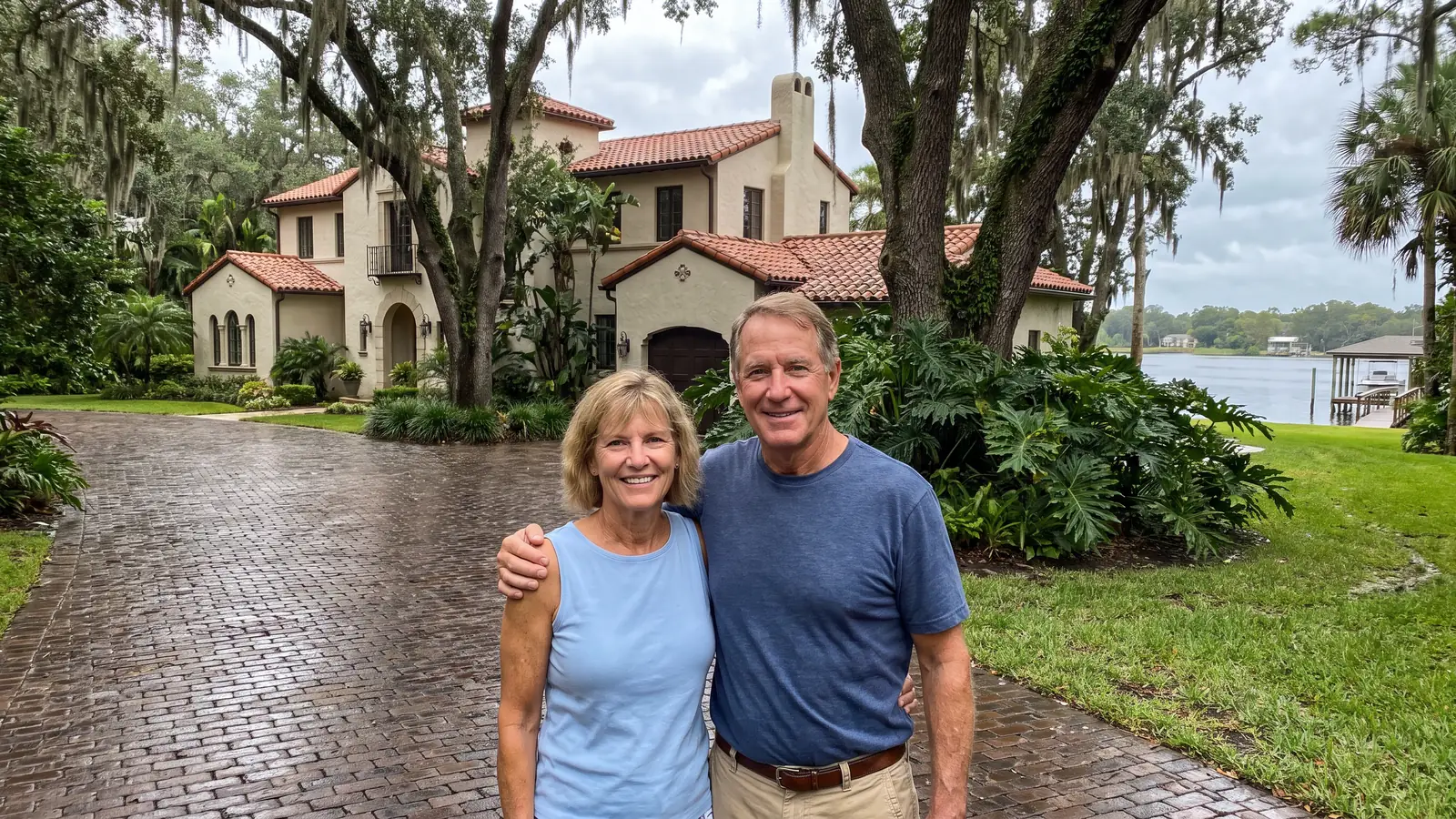
Paver sealing for Lake Asbury homes
Paver Sealing in Lake Asbury, FL
North of Penney Farms and south of Black Creek, Lake Asbury pavers can be sealed; call (904) 567-0456 for an estimate.
- Brings out deeper paver color
- Fresh joint sand helps lock pavers in place
- Gives weeds less room to grow
- Makes the surface easier to keep clean
- Free estimate, no obligation
Request a Free Estimate
Free, no obligation.
Fast, careful paver sealing in Lake Asbury
Paver sealing is available across Lake Asbury, from the older streets near the lake to the newer ones east of it. Washing, new joint sand and a sealer coat for your driveway, walkway or pool deck all start with a free estimate from a local contractor. To request your free estimate for your lot, count on a reply within 1 business day, usually much sooner.
Your driveway runs long across a wide Lake Asbury lot, and the pavers have gone gray and gritty. Weeds sit in the joints where the sand used to be. After a wash, a refill and a fresh coat, the whole drive reads as one color again. To talk it over first, call (904) 567-0456.
Why hire a local paver sealing contractor in Lake Asbury?
Lake Asbury sits in sandy Clay County ground, about 30 miles southwest of downtown Jacksonville. A local contractor knows what sand does to a paver base, and to hear how that fits your lot, request your free estimate.
Free, with no pressure
A contractor measures your Lake Asbury pavers and gives you a price at no charge. You are under no obligation to book after the visit, and you can ask any question you like.
A range to check against
Published rates across Northeast Florida for clean, re-sand and seal sit between $1.75 and $3.25 per square foot. Hold any Lake Asbury quote up to that.
Room for long drives
Bigger Lake Asbury lots mean more square feet. Ask for the price per square foot and the total in writing, so you can compare.
Finish stays your choice
Matte or wet look, you decide. Check for association rules first, since not every Lake Asbury street has them.
Get Your Free Estimate in Lake Asbury
Tell us about your pavers in Lake Asbury.
Free, no obligation
What paver problems show up most in Lake Asbury?
Deep sand under the base
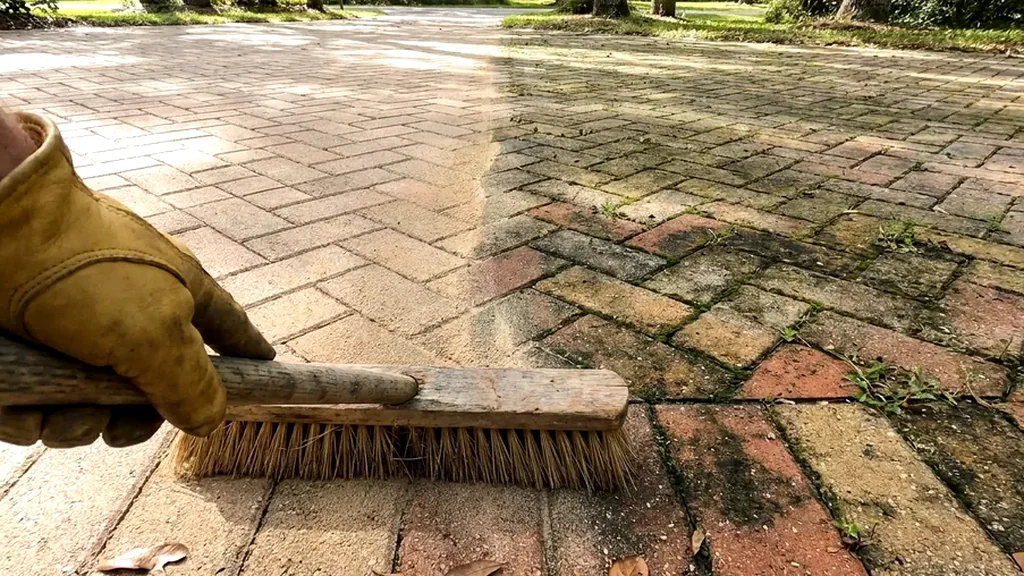
The USDA Penney soil series has its type location in Clay County and is deep, excessively drained, rapidly permeable sand or fine sand. One Clay County horticulture agent described the county's sites as generally sandy, dry and low in organic matter. A paver maker says a weak or poorly compacted base is one of the leading causes of pavers sinking or shifting. So on sandy ground, the base is checked ahead of the sealer. A dip near the garage or the street end is the usual first sign, and you can point it out during the walk-through. Fixing that in the first visit costs less than a second coat later. Clay County sees the same summer downpours as the rest of the First Coast, and sand drains them fast.
Oak drop across wide lots
UF/IFAS says live oaks grow 60 to 80 feet tall with a spread of 60 to 120 feet, and that water oak acorns are prolific and stain asphalt and concrete where they fall. A wide Lake Asbury lot can hold a lot of canopy over a long driveway. Stains from the oaks soak into bare pavers. A sealed surface rinses clean more easily, which means less scrubbing next fall. Laurel oak and live oak leaves add to it, and all of it lands on the pavers at once. Cleaning and sealing in one visit leaves less for next fall's acorns to stain. A tall oak over a long drive means acorns land across a lot of surface.
Iron in the irrigation water
Iron is common in Florida well water, UF/IFAS says, and it can leave rust deposits and orange streaks on irrigated pavers. On a well-watered Lake Asbury lot, a sprinkler line can streak walkways and drive edges. Rust marks are handled before sealing, though a deep stain may only fade. A contractor can point out which heads are doing it, and a landscaper can adjust them. Pavers near the heads are the first to show it. The strip along the lawn edge is where iron stains first show.
Pavers laid in different decades
One market profile puts Lake Asbury homes at 1967 to 2024, with a median year of 1978. A street can hold pavers of many ages. A Jacksonville cost guide says efflorescence, the chalky white deposit, trapped under sealer is one of the two most common sealing failures. So new pavers wait before a first coat, and old ones get checked for an earlier coat. Ask the seller or the builder when your pavers went in, since the answer sets the timing for the first coat. Older pavers may carry an old failing coat that has to be stripped before new sealer goes on. Pavers laid by a builder in 2005 and pavers laid by an owner in 1985 are not the same job.
Full sun on long driveways
A Jacksonville paver company says sun fades unsealed concrete pavers noticeably within three to five years, and that sealing reduces UV fade, joint washout and mildew. A cost guide says driveways often need resealing closer to the three-year mark. A long run of open pavers takes the full day of sun. The wash, refill and coat go on together. That is why a Lake Asbury drive can look washed out well before the pavers themselves are worn. Wash, refill and seal together, and the driveway gets its color and its joints back in one visit. Mildew rides along on the shaded edges where long drives meet the lawn.
What should I tell a contractor about my Lake Asbury street?
Tell the contractor roughly when the pavers went in, and Lake Asbury's growth explains why that matters. The community counted 2,228 people in 2000, 8,700 in 2010 and 11,036 in 2020. Pavers here were laid in waves, so two neighbors can have different needs. Call (904) 567-0456 and tell the contractor whatever you know about yours.
One market profile counts 387 homes in the tracked Lake Asbury area, built from 1967 to 2024, with a median sold size of 2,151 square feet. Bigger homes tend to mean longer driveways and more square feet to seal. That is why the price should be written per square foot as well as in total. To get a written scope for your lot, request your free estimate.
Nearby neighborhoods named in that profile include Asbury Plantation, Asbury Creek, Glenwood Estates, East Glenhaven, Battery Bluff and Village Park. Not every street has an association, so check your own documents first. Under Florida Statute 720.3035, an HOA may review changes only as far as its declaration or published guidelines allow. Call (904) 567-0456 if you want help reading the finish rule.
What does paver sealing cost in Lake Asbury?
The range most companies publish for Northeast Florida is $1.75 to $3.25 per square foot to clean, re-sand and seal. A Jacksonville cost guide says homeowners around Green Cove Springs and Middleburg sometimes find lower pricing because of less competition and simpler access. Your Lake Asbury quote may land anywhere near that range. Call (904) 567-0456 for a written number.
Square feet move the price most. Lake Asbury lots are wide, so a long driveway, a walkway and a pool deck add up fast. A failed coat comes off before a new one goes on, and any low spot is repaired first. Smaller jobs cost more per square foot, so to price yours, request your free estimate.
| Paved area | Typical example | Clean, sand and seal |
|---|---|---|
| 300 sq ft | Small patio or walkway | $525 to $975 |
| 600 sq ft | Two car driveway | $1,050 to $1,950 |
| 1,000 sq ft | Large driveway or pool deck | $1,750 to $3,250 |
| 1,500 sq ft | Driveway plus pool deck | $2,625 to $4,875 |
Math based on the $1.75 to $3.25 per square foot that Northeast Florida paver companies publish. Your contractor sets the actual price after seeing the surface. Repairs, leveling and stripping failed sealer are usually extra.
How does a paver sealing job work in Lake Asbury?
Meet at the property
The contractor walks the driveway, walkway and pool deck, measures each one and checks the edges. Dips, weeds, rust and old coats go into the written scope. You get the price and the square feet before any work starts. Ask any question while the contractor measures. The written scope lists each surface by name. The contractor can also measure from the road to the garage to price a long run of pavers correctly.
Check the base
Sandy ground can let a base settle, so the contractor looks for low spots and lifted edges. A paver maker says a weak base is a leading cause of sinking. Sealing only preserves a problem, so repairs come before any coat. If the base needs work, that is written into the price too. Roots and sunken sections are noted in the scope. A pool deck or lanai edge, if you have one, gets the same look as the driveway.
Clean and treat
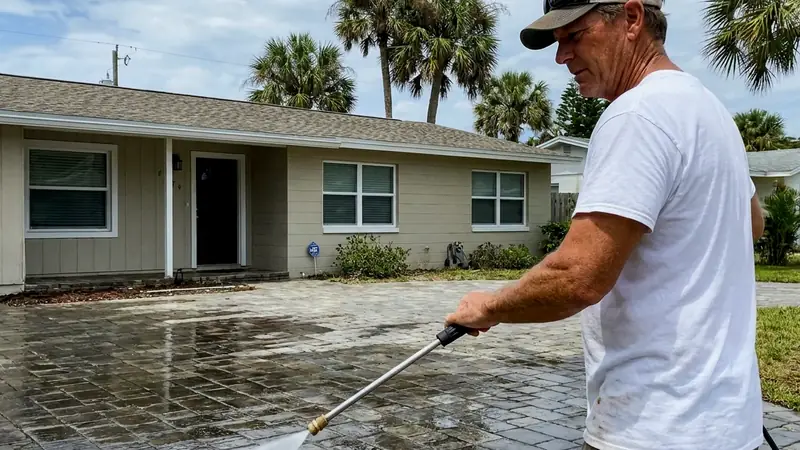
Algae, dirt, oak stains and tire marks come off first. Oil and rust spots are treated one by one. Cleaning is done at moderate pressure, since a hard wash can loosen joint sand and widen the joints. Washing is only the first half of the job, which is why refilling and sealing follow. Oak stains and green film are the two jobs here that take the longest. Sandy soil drains quickly, so washing and sanding can fit into the same day in dry weather.
Refill and dry
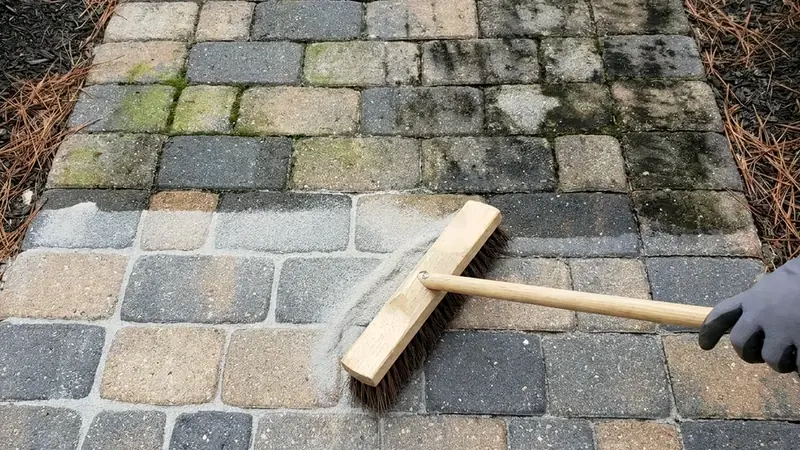
Silica sand is swept into every joint, and the surface is left to dry fully. Sealer goes on only when the pavers are dry, because a damp surface is the cause of most white or blotchy sealer. Nearly every call about white sealer traces back to damp pavers or too much product, according to one Jacksonville company. This is why the contractor may move a job after a storm. A dry window after rain is worth waiting for, since sealer holds best on a dry surface.
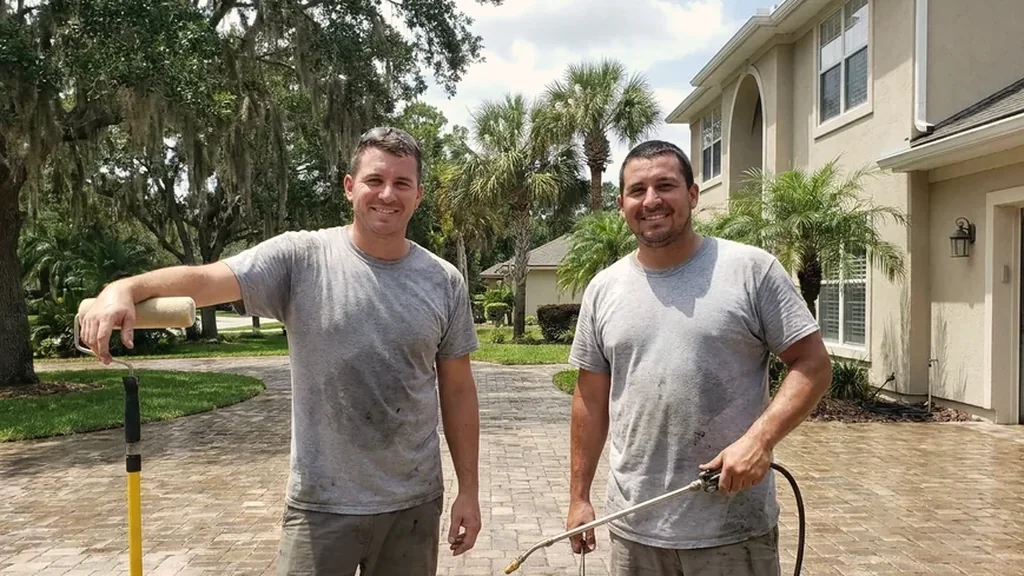
Spray and back-roll
The sealer is sprayed, then rolled for even coverage. You stay off it for a few hours on foot and about a day by car. A water test later tells you when the coat is done: beading means it works. Cars come back after about a day, once the contractor says the coat is set. You keep the final say on when the driveway is back in use. You will be told when the contractor expects the coat to be ready for cars.
Complete paver services in Lake Asbury
A full job goes in order. The pavers are washed and left to dry, fresh silica sand is swept into the joints, and the sealer follows by spray and roller. Skipping the drying step is how a coat turns cloudy. When you want that plan written for your driveway and walkway, request your free estimate.
Concrete pavers make up most driveways, and brick and travertine turn up on patios and pool decks. A Jacksonville company says dense natural stone such as travertine is the main case where leaving it unsealed is defensible, so the contractor looks before recommending a coat. For concrete, sealing cuts fade, joint washout and mildew. Call (904) 567-0456 if you are not sure what your pavers are.
Pros typically spray sealer and then back-roll it, which gives even coverage and works the coat into the joints. Water-based sealer cannot go over solvent-based sealer, so tell the contractor about any older coat. Color depth is the trade: wet look is richer, matte hides wear. To compare finishes for your yard, request your free estimate.
Plan the day around dry weather, since sealer needs a dry surface. Walking is fine within a few hours, but vehicles need longer. If you have an HOA, check its street parking rules in advance. Call (904) 567-0456 to pick a day that keeps rain off the work.
Questions to ask before you hire
- Can the joints be refilled where roots or settling have left gaps?
- Will the estimate show the square feet you measured and the price for each square foot?
- Will a sealed finish make my steps and pool surround slippery when wet?
- Can you seal the pavers near my pool cage without getting sealer on the screens?
- Who tells me when rain pushes the job to another day?
- Will you walk the property with me first and point out sunken or cracked pavers?
- What do you do about the white haze that can show up under a sealer?
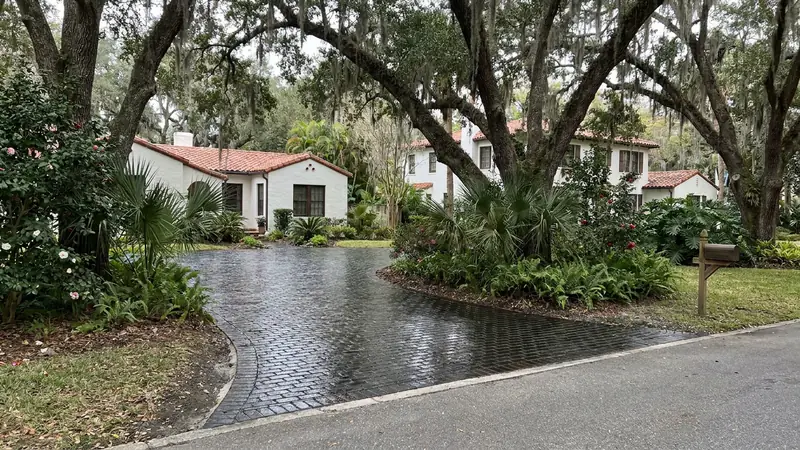
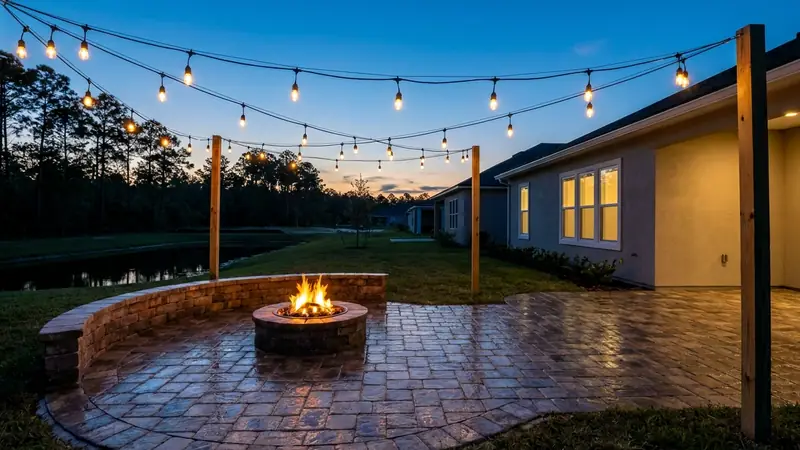
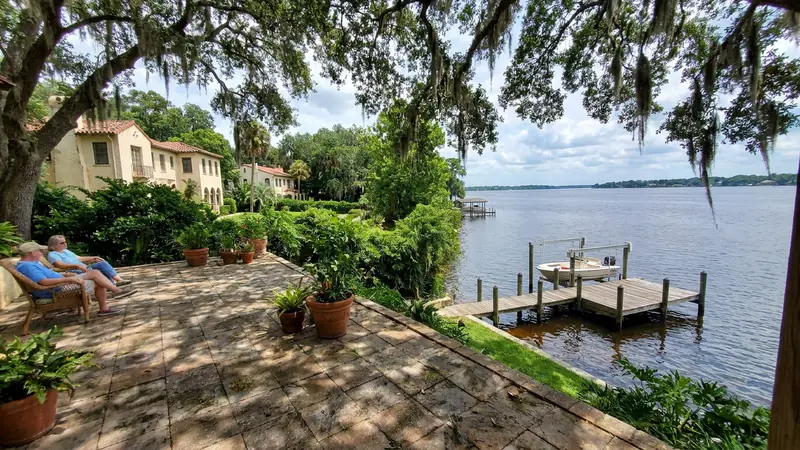
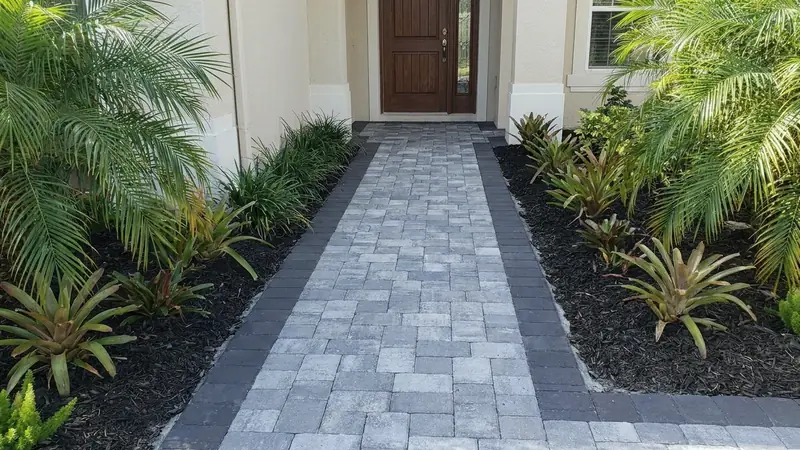
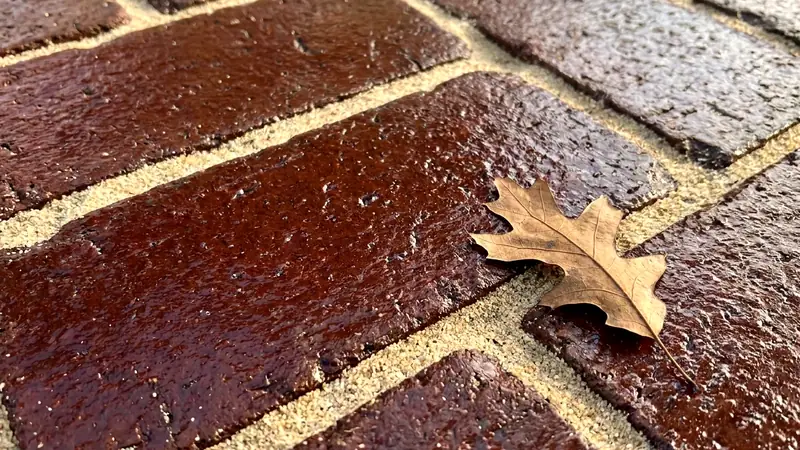
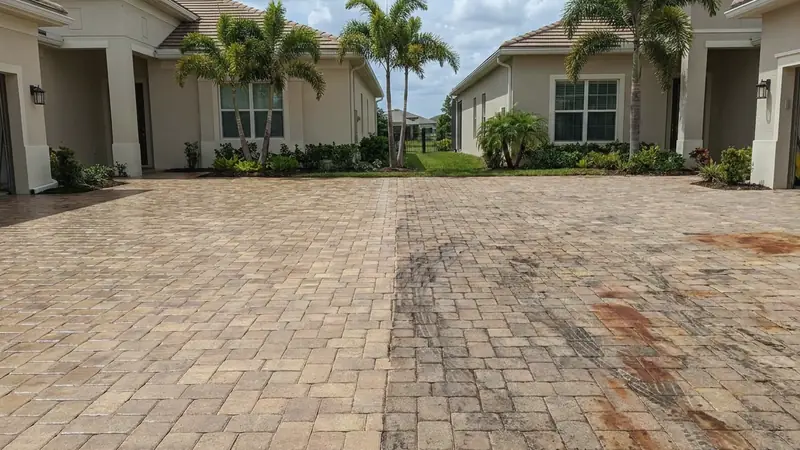
What do sealed pavers look like around Lake Asbury?
Why local matters in Lake Asbury
Local starts with the ground. A weak or poorly compacted base is one of the leading causes of pavers sinking, shifting or cracking, and sandy Lake Asbury soil drains fast. A contractor who works Clay County knows to look at the base first. Call (904) 567-0456 to ask how that check is done.
Local also means knowing the distance. Lake Asbury is 13 miles southwest of Orange Park and 30 miles southwest of downtown Jacksonville, and its main roads are two-lane. A contractor who works the area plans the day around those drives. To book a time, request your free estimate.
A local contractor knows Clay County's mix of homes. Some streets have an association and some do not, and some pavers are original while others are replacements. That means two houses on one road can need different plans. Call (904) 567-0456 and tell the contractor which one yours looks like.
Where is Lake Asbury, and what is it known for?
Lake Asbury is a community in Clay County that the Census Bureau calls the Asbury Lake CDP. It wraps around a small reservoir of the same name, with Black Creek on its north side, and lies northwest of Green Cove Springs and east of Middleburg. Its waters offer fishing, kayaking and canoeing. To plan a visit, request your free estimate.
North of Penney Farms, the area is defined by two-lane roads: County Road 220, County Road 218, Russell Road, Sandridge Road and Henley Road. Penney Farms, along State Road 16, was founded in 1926 and first planned as an agricultural village. It became a retirement community after the 1929 stock market crash. Call (904) 567-0456 to book a free walk-through of your pavers.
Frequently Asked Questions
How is paver sealing priced by the square foot around Lake Asbury?
Published rates across Northeast Florida for clean, re-sand and seal sit between $1.75 and $3.25 per square foot. Removing a failed coat first costs extra. A free visit turns that into a firm number for your lot. Ask that the estimate lists the square feet and the price for each, so you can compare bids. That makes the bids easy to compare. Ask the contractor to put each cost line in writing.
Should a Lake Asbury homeowner seal their pavers?
Yes. A Jacksonville paver company says sealing concrete pavers in Florida significantly reduces UV fade, joint washout and mildew. On sandy Lake Asbury ground, keeping joint sand in place also helps the pavers stay level. The estimate visit shows what your own pavers need. The first sign is usually a dip near the garage, the street edge or the apron.
Is it better to spray or roll paver sealer?
Pros typically do both. They spray the sealer, then back-roll it for even coverage and to work it into the joints. Ask your Lake Asbury contractor how they apply it. Rolling alone can leave lap marks, so the back-roll step matters. Spraying alone can put on too much on textured pavers. Sealing in dry weather is the safer bet in Clay County.
Why is paver sealing so expensive?
Prep, not product, takes most of the price. That means washing, stain treatment, joint refilling and a wait for dry pavers. A contractor should be able to list the steps in the estimate. What you pay for is time on site. The estimate should say which steps cost the most.
What is the right paver sealer for my Lake Asbury pavers?
The right pick turns on your surface and the finish you want. A film sealer can be matte, satin or wet look, and a penetrating sealer leaves the look almost unchanged. Water-based sealer cannot go over solvent-based sealer, so share any past coat. A contractor can help you match the product to your pavers and your yard. Ask what each finish looks like before you pick. A gloss that suits the street is the easiest to defend to a board.
Do I need approval from an HOA in Lake Asbury?
Only if your street has one. Under Florida Statute 720.3035, an association's review reaches only as far as its own declaration or guidelines say. Read your documents, then pick a finish to match. If your street has no association, the choice is yours. Whether your street has an HOA is answered in your own documents.
How soon can I drive on my driveway after sealing in Lake Asbury?
Foot traffic is usually fine within a few hours, and vehicles need longer. A lot of owners leave the cars on the street or in the garage for the night. Your contractor will give you the time for their product. A walkway or patio opens up sooner than the driveway does. Rain on a fresh coat is the thing to avoid. Weeds and ants in the joints are a sign the sand is gone.
Can new pavers be sealed right away in Lake Asbury?
Not usually. A Jacksonville cost guide warns that trapping efflorescence under sealer is a common failure. Give new pavers time to settle, then have the joints refilled before the first coat. Sealing is best after the joints are re-sanded, never before. Pool decks and lanai edges often open sooner than a drive.
Ready for a Free Estimate in Lake Asbury?
Call (904) 567-0456 and tell us about your pavers.
Free, no obligation